Home
Home
News
Professor Susan Carle and Professor Padideh Alai of Washington College of Law, American University visited UIBE and attended the 141st Session of the Workshop on Economic and Trade Law
On May 6, 2019, Professor Susan Carle, vicedean of Washington College of Law,American University, Professor Padideh Alai of Washington College of Law (WCL), American University, and Neysun A. Mahboubi, researcher of the Center for Contemporary Chinese Law Studies, University of Pennsylvania, visited UIBE Law School. Professor Shi Jingxia, dean of UIBE Law School and Professor Gong Hongliu, vice-dean of UIBE Law School met with the delegation.
Professor Shi warmly welcomed the visit of Professor Susan Carle and her delegation. Both sides introduced the basic situation and advantages of the two law schools respectively. Then, the two sides conducted in-depth discussions on cooperation between the two school and professional issues on international law.

(Left to right: Neysun A.Mahboubi, Prof. Padideh Alai, Prof. Susan Carle, Prof. Shi Jingxia, Prof. Gong Hongliu)
Following the meeting, the 141st session of the Workshop on Economic and Trade Law was held in conference room 729, Ningyuan Building. The theme of this workshop was “The History of Free Trade and The Future of WTO”. Prof. Alai delivered the main speech. Professor Alai graduated from Harvard University with a JD degree. Professor Alai is steeped in international economic law, WTO law and comparative law study. She teaches courses in international trade law and comparative law at WCL. She is the chairman of the Wenger Family Lecture Series of WCL International Trade Law and the director of the Hubert Humphrey Fellowship Program, a U.S. State Department sponsored Fulbright Program. Professor Alai is also a member of the executive committee of the Society of International Economic Law (SIEL), an associate member of the Society of International Comparative Law and a member of the academic committee of the ELSA/WTO Moot Court Competition. She was the co-chairman of the International Economic Law Group (IELG) of the American Society of International Law (ASIL) and the co-chairman of the Comparative Law Department of AALS. In August 2017, Professor Alai was appointed as the Director of International Law and Comparative Law Studies and dean of the International Law Study Program (ILSP).
Professor Shi Jingxia was the host of the lecture. Mr. Li Yongzhen, vice director of the Department of Treaty and Law, Ministry of Commerce of China, Ms. Neysun A. Mahboubi, Researcher of Contemporary Chinese Law Research Center of Penn University, Professor Gong Hongliu, Professor Feng Hui, Professor Bian Yongmin, Professor Chen Weidong, Dean Assistant Zhang Xin, Dean Assistant Wang Lebing, Assistant Professor Li Fenghua, Assistant Professor Zheng Haiping as well as some postgraduate students attended the lecture.
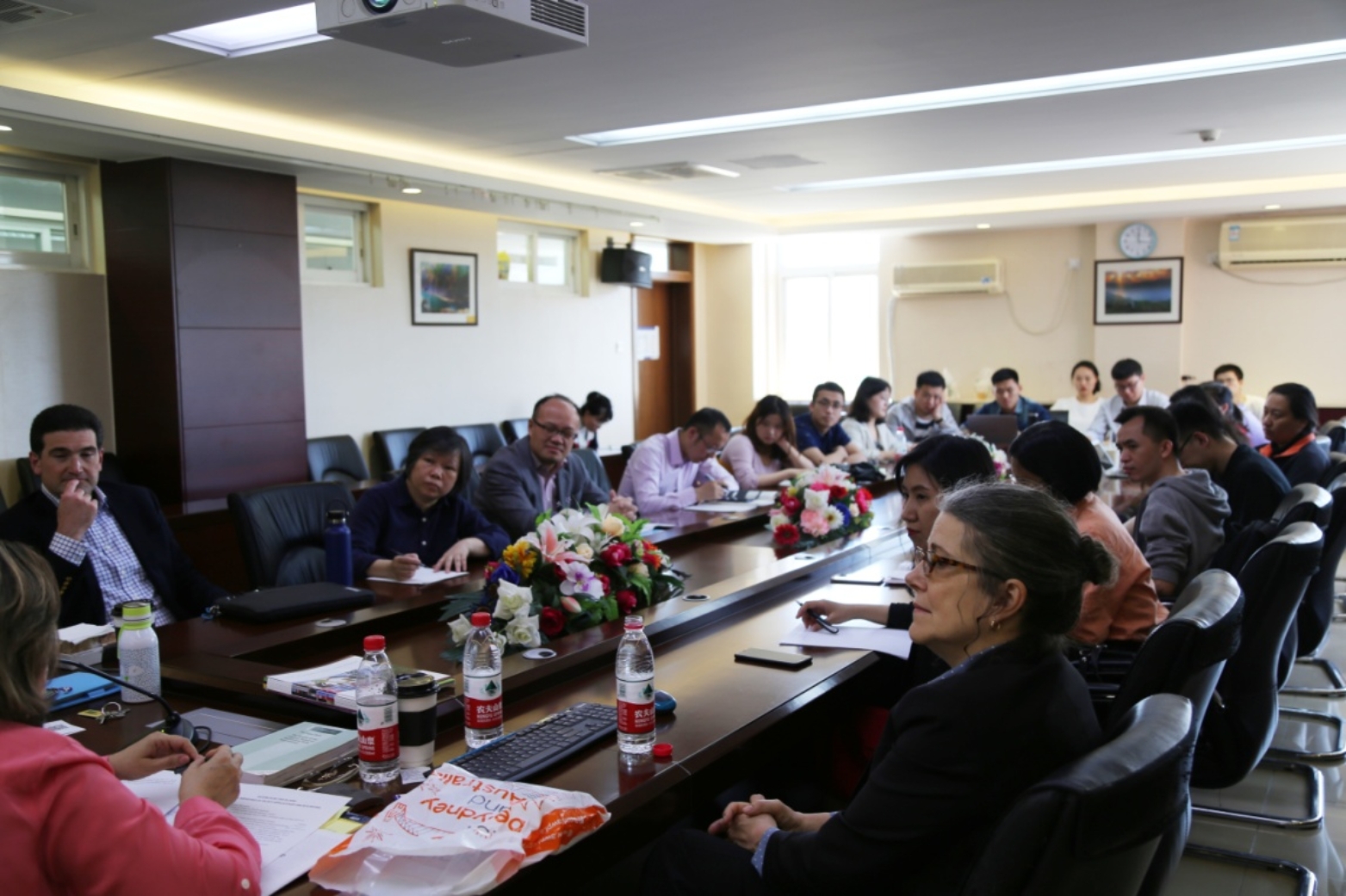
(conference ongoing)
Professor Shi warmly welcomed the guests and briefly introduced Professor Alai’s academic background to the participants. She pointed out that although the topic of this lecture is very broad, everyone should be aware of the history and future trends of free trade and WTO. She also mentioned that the theme of this workshop reflected the current competition between multilateralism and regionalism, and the challenges that the Trump Government brought to free trade. Free trade is an important issue concerning international economy, politics and law, which deserves special attention and follow-up at the moment.

(Prof. Shi giving the opening speech)
Prof. Alai started with the history of WTO and GATS. Professor Alai pointed out that before the trade protectionism of the Trump Government, American history had also experienced a shift from protectionism to globalism and free trade. She mentioned how the high tariffs and protectionism that prevailed in the United States in the last century affected World War II, and the trade protectionism of the Trump administration was similar to that of the U.S. in the 1930s and 1940s. After World War II, the United States sought to create a new liberal order, and the Brighton Forest system as well as many multilateral international organizations were established in this background, such as the International Monetary Fund (IMF), the World Bank (WB) and the International Trade Organization (ITO). But at that time, the U.S. Congress was reluctant to approve joining the ITO, believing that it would erode the power of domestic government too much, a view that is very similar to the criticism of the current Trump Administration to the WTO.
Additionally, Professor Alai pointed out that she was a supporter of the WTO dispute settlement mechanism, despite her doubts of whether the world was ready for the arrival of the WTO system at that time, and that the negotiators probably did not expect it to be so widely used. Professor Alai also talked about the reasons why the United States blocked the re-election of Appellate Body Members and criticized the Appellate Body and its Members fairly, such as the 90 rules on trial deadlines and the AB’s rulings on matters unrelated to disputes, but she did not think any of these were sound. As for the WTO reform proposals put forward by both China and the EU, Professor Alai believed that the United States is not very likely to accept these proposals, and the United States may prefer to return to the GATT era. The strategy of the United States is to restrict China’s use of WTO rules and exert pressure on China to solve China-related issues by obstructing the normal operation of the WTO’s Dispute Settlement Body.
Finally, Professor Alai held that it is a bad idea for the United States to undermine the WTO system, which would also undermine the fundamental interests of the United States. Since there is broad consensus among WTO members, it is necessary to amend the WTO rules. If the United States do have some political intentions, procedural disputes of the Appellate Body can be resolved and new members can be appointed. However, there are many different interests among WTO members apart from the disputes on the Appellate Body, which will make the above issues hard to solve in the short term.
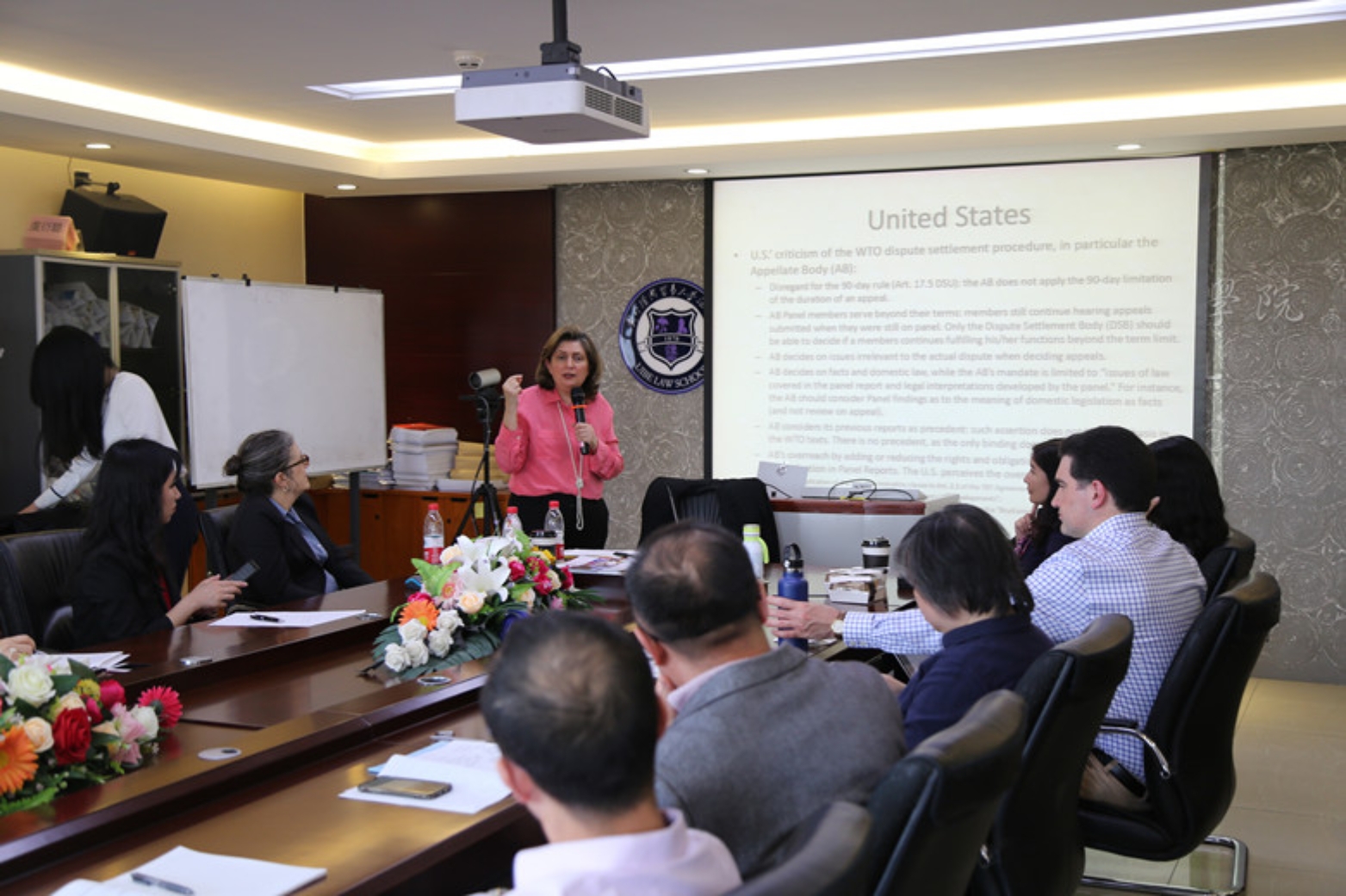
(Professor Padideh Alai giving speech)
In the Q&A section, Ph.D. candidate Hu Chen, raised questions about how to determine the national security boundaries and how to invoke the national security provisions. Professor Chen Weidong asked about Professor Alai’s opinion on some scholars’ suggestions on reforming WTO and its dispute settlement mechanism. Professor Bian Yongmin asked about whether the reform of substantive trade rules should be considered ahead of the reform of the Appellate Body. Assistant Professor Li Fenghua asked whether the WTO reform proposals were feasible and whether they could save the WTO. Vice-Director Li Yongxian provided profound insights into the content of the lecture and inspired more thinking. Professor Alai responded to the questions in detail and Professor Shi also gave her response and suggestions to the questions. The lecture was successfully concluded with the hearty discussion between teachers and students.