Home
Home
News
UIBE Successfully Held Carbon Emissions Trading Legislation Seminar
On June 1, 2019, the Carbon Emissions Trading Legislation Seminar hosted by the University of International Business and Economics School of Law was successfully held at the Tangla Yaxiu Hotel in Beijing. As the “Interim Regulations on the Management of Carbon Emissions Trading (Consultation Draft)” was issued by the Ministry of Ecology and Environment in early April 2019, the seminar invited nearly 20 leaders and experts from the Ministry of Ecology and Environment, the Ministry of Justice, the China Low Carbon Alliance, and Peking University, Tsinghua University, Renmin University of China, China University of Political Science and Law, Henan University, Shanghai University of Finance and Economics and the University of International Business and Economics to attend the conference. Participants made suggestions on the institutional construction and legislative arrangements of China’s carbon emission trading market. The atmosphere of the meeting was warm and fruitful.
Mr. Bie Tao, director of the Regulations and Standards Department of the Ministry of Ecology and Environment, Deputy Director Jiang Zhaoli of the Climate Department of the Ministry of Ecology and Environment, and Mr. Song Ermeng, the Fourth Legislative Council of the Ministry of Justice, delivered speeches on the legislative significance, history and progress of the carbon emission trading market in China. They believed that the topic of this meeting was of sufficient necessity and importance and hoped that experts and scholars could actively share their insights.
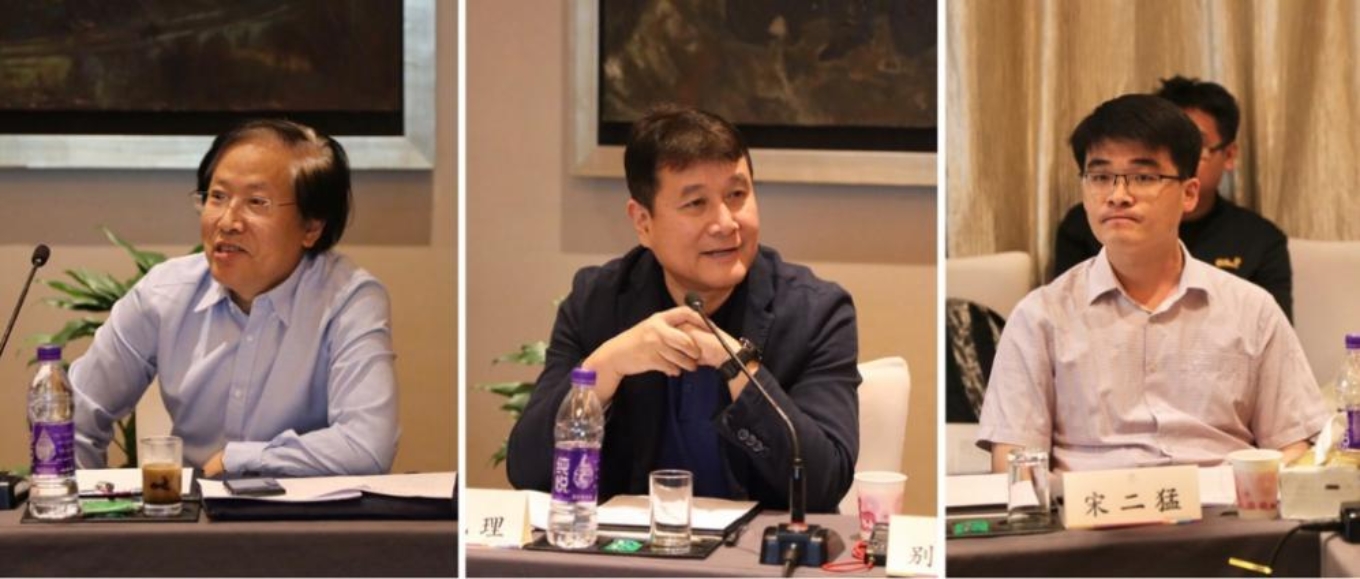
(From left to right: Director Bie Tao, Deputy Director Jiang Zhaoli, Mr. Song Ermeng)
Dr. Zhang Jianyu, Secretary-General of the China Low Carbon Alliance, introduced the opportunity of the seminar and the guests, and encouraged experts and scholars who have been deeply involved in the carbon trading field for a long time to speak freely. Professor Ding Ding from the University of International Business and Economics Law School then gave a guiding speech. She shared her team’s feedback on the “Interim Regulations on the Management of Carbon Emissions Trading (Consultation Paper)” and made a brief analysis of the legal jurisprudence and possible problems in the practice.
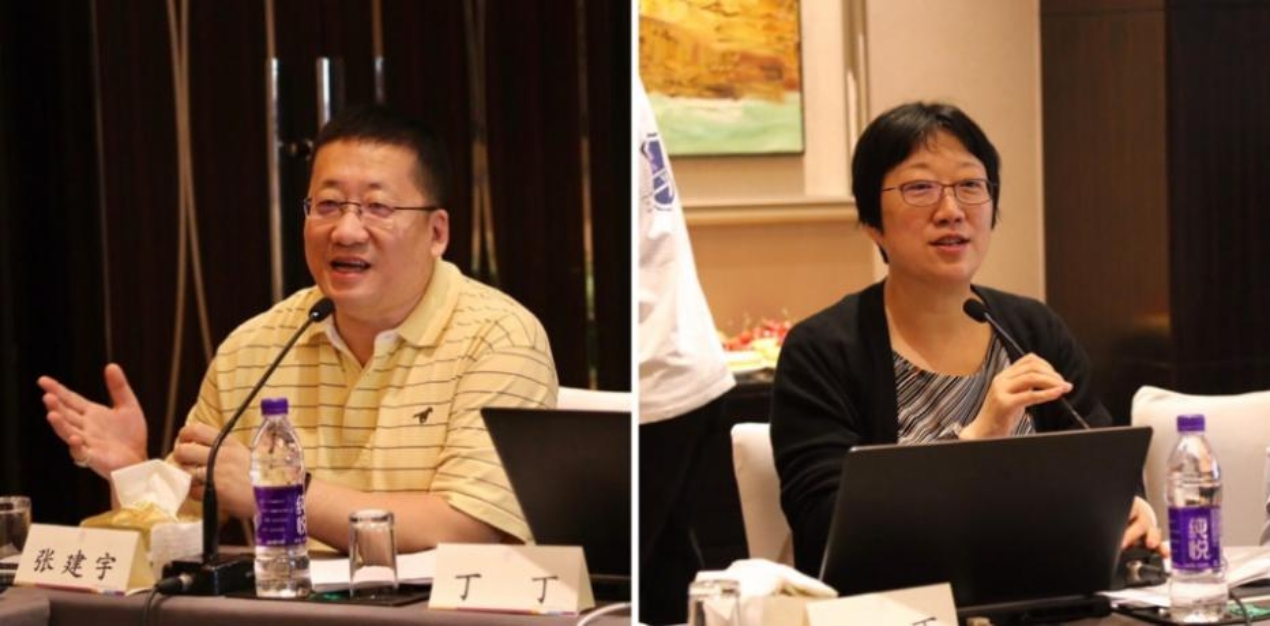
(From left to right: Secretary General Zhang Jianyu, Professor Ding Ding)
At the meeting, Professor Zhou Ke from the Law School of Renmin University of China, Professor Cao Mingde from the School of Civil and Commercial Economics of China University of Political Science and Law, Professor Wang Jin from Peking University Law School, Professor Lin Canling from the School of International Law of China University of Political Science and Law, and Tsinghua University Law School Professor Wang Mingyuan, Professor Bian Yongmin and Professor Fu Jun from the University of International Business and Economics School of Law, Associate Professor Wang Yunpeng from the Law School of Henan University, and Dr. Feng Jingru from the School of Law of Shanghai University of Finance and Economics delivered speeches on the “Interim Regulations on the Management of Carbon Emissions Trading (Consultation Paper)” concerning the legislative purpose, legal basis, regulatory object, text structure, language logic, and the legal attributes of the “carbon emission rights”, the definition of the authority and responsibility of the regulatory body, marketization and the consequences of the transaction, combining international experience and research results, and conducted in-depth and detailed discussions and exchanges.
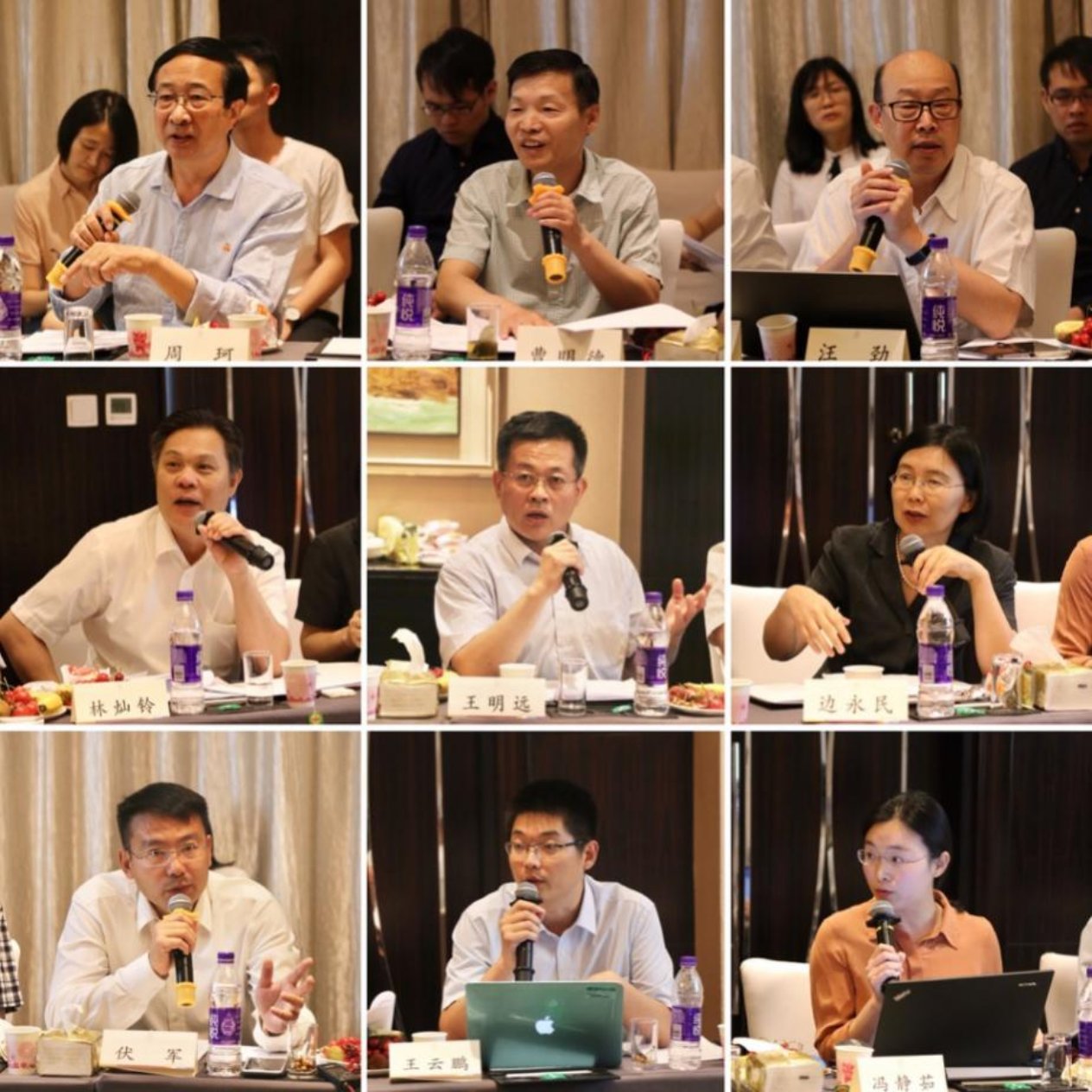
(From left to right: First line: Professor Zhou Ke, Professor Cao Mingde, Professor Wang Jin; Second line: Professor Lin Canling, Professor Wang Mingyuan, Professor Bian Yongmin; Third line: Professor Fu Jun, Associate Professor Wang Yunpeng, Dr. Feng Jingru)
Since 2011, seven provinces and cities, including Beijing, Tianjin, Shanghai, Chongqing, Hubei, Guangdong and Shenzhen, have carried out pilot projects on carbon emission sequestration trading, achieving a “double decline” in total carbon emissions and intensity, and have accumulated a wealth of practical experience and talent reserves in the construction and operation of carbon market systems. With the “National Carbon Emission Trading Market Construction Program (Power Generation Industry)” issued by the Ministry of Ecological Environment at the end of 2017, the national carbon trading system was officially launched, and the systematic construction of the national carbon market was continuously promoted. Experts attending the meeting believed that the promotion of the “Provisional Regulations on the Management of Carbon Emissions Trading” as its core work should draw on the useful experience of the seven pilot provinces and cities, emphasizing the principled and easy-to-operate market rules. Participants generally agreed on the role of carbon emissions trading as an incentive to control emissions as a market mechanism but pointed out that a real cap on total emissions should be set to achieve emission reduction purposes. The experts also believed that the regulatory administrative authority to regulate the carbon emissions trading market, as well as the legal responsibilities of the subjects involved in the market, should be clarified and strengthened. At the same time, the introduction of relevant supporting management systems should be accelerated and the construction of infrastructure should be promoted, such as the enterprise carbon emission data reporting system, the national carbon emission right registration system and the carbon emission right trading system.
Finally, Director Bietao made a concluding speech to this seminar, affirming that the meeting has important inspirational significance for the improvement of “Interim Regulations on the Management of Carbon Emissions Trading (Consultation Papers)”, said that China’s carbon emissions trading legislation will be a challenging systematic legislative project, and that we are looking forward to the continued attention of experts and scholars, but also looking forward to “Interim Regulations on the Management of Carbon Emissions Trading” being promulgated at an early date.
Thus, this legislative seminar on carbon trading has been successfully concluded. Some Ph.D. and postgraduate students from UIBE Law School and the China University of Political Science and Law also attended the seminar. The seminar was also supported by the Beijing office of the American Environmental Protection Association and the Institute of International Economic Law of the Chinese Law Society.